

THE JOURNEY
The Journey
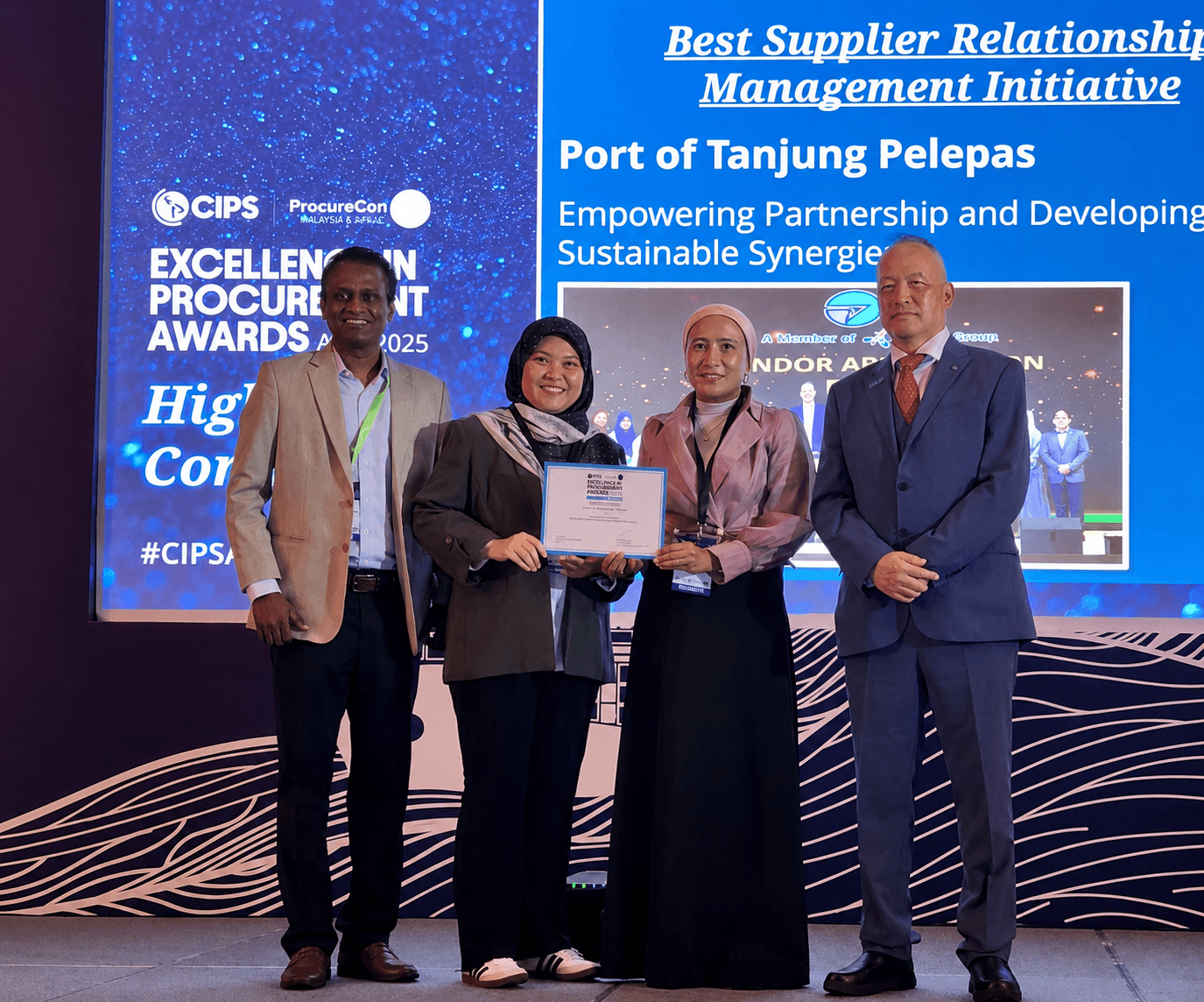
In this episode, our Editor-in-Chief sits down with Dr. Irwana for an insightful conversation on the challenges, resilience, and lessons behind managing supply chains at one of Southeast Asia’s key ports.
[BSC] Dr. Irwana, your career journey from planning, logistics, procurement and then to leading the supply chain at one of the busiest transshipment hubs is remarkable. Looking back at your journey, what was that one "defining moment" you took that fundamentally shifted your path toward becoming a professional in this field?
A defining moment in my career occurred during the 2008 global economic crisis, when I was managing planning and subcontractor operations in Vietnam’s electronics manufacturing sector. Overnight, we faced severe material shortages, cancelled orders, volatile demand, and inventory that risked becoming obsolete. It was a period where the traditional playbooks failed, and decisions had to be made with imperfect data and immense pressure.
That moment fundamentally shifted my career—from managing processes to leading strategic transformation. It set me on the path of building supply chains that are not only efficient but resilient, agile, and able to create enterprise wide value even in the face of disruptio**n.
[BSC] As one of the busiest hubs in Southeast Asia, Tanjung Pelepas operates on a massive scale where even small errors have big consequences. In your role, what have been the most interesting supply chain challenges you've faced here, and what key lessons from the port’s fast-paced environment do you think every SCM professional should know?
At Tanjung Pelepas (PTP)—one of the busiest and most strategic transshipment hubs in Southeast Asia—scale and speed define everything. When vessel turnaround time is measured in hours, even a small delay in spare parts, equipment readiness, or supplier response can create cascading operational impacts.
One of the most persistent challenges has been managing lead time variability in a high velocity environment. Equipment reliability, spare part availability, and supplier agility must be synchronized seamlessly to support real time operations. Visibility and responsiveness are not optional; they are critical.
The key lesson for SCM professionals is clear:
- Visibility is power. You can’t improve what you can’t see.
- Supplier collaboration is strategic, not transactional.
- Forecasting, digital tools, and inventory buffering must work together.
Above all, supply chain excellence at a port like PTP requires discipline, partnership, and the courage to challenge legacy ways of working.
[BSC] Global supply chains are currently facing unprecedented levels of uncertainty, from geopolitical shifts to unpredictable market demands. Based on your experience, what is your best advice for SCM leaders on navigating these disruptions? How should companies rethink their strategies to move from just being 'efficient' to being truly 'resilient'?
Supply chains today operate in a world shaped by geopolitical tensions, regionalization, climate risks, and unpredictable market forces. The era of solely cost driven, linear supply chains is over. Resilience must now be treated as a strategic capability.
My advice to SCM leaders is to anchor their strategy on three pillars:
a. Digital Intelligence
Real time data, AI driven forecasting, IoT visibility, and predictive analytics must be embedded across the entire chain. Digital transformation is no longer a project—it is a leadership mandate.
b. Multi Region Resilience
Organisation must diversify suppliers, build redundant capacity, and adopt scenario-based planning. Optionality is the new competitive advantage.
c. Talent & Capability Development
Technology enables resilience, but people create it. The next generation of leaders must combine digital fluency with strategic thinking, financial acumen, and cross border collaboration skills. To be truly resilient, companies must shift their mindset:
From lowest cost → to lowest risk From linear networks → to adaptive ecosystems From transactional relationships → to strategic partnerships
Resilience is not built in a crisis; it is built every day through governance, transparency, and consistent capability building.
[BSC] As a Fellow of CIPS and someone who is deeply active in community development, What is your key advice for the younger generation who want to build a career in supply chain?
Supply chain is one of the most exciting fields today because it sits at the intersection of technology, sustainability, geopolitics, and global commerce. My advice to the younger generation is:
- Stay curious. This field evolves every day—new technologies, new risks, new opportunities.
- Think beyond operations. Understand how supply chain drives enterprise value, competitiveness, and ESG impact.
- Lead with integrity and inclusion. Responsible sourcing, ethical supply chains, and sustainability are now core expectations.
- Invest in communication and influence skills. The best supply chain professionals are those who can align stakeholders and drive change.
- Seek mentors and join professional networks like CIPS. Your career accelerates when you learn from others and stay connected to the global community.
The future belongs to those who can combine technical capability with strategic thinking, empathy, and leadership.
Connect with her on LINKEDIN
MOMENTS THAT SHAPED THE LEADER
Turning Points
The Biggest Shift to Predictive and Digitally Enabled Planning
The biggest shift we made was moving from reactive replenishment to predictive and digitally enabled planning. This allowed us to reduce emergency procurement, strengthen supplier readiness, and support the Organisation in achieving record throughput while improving operational reliability.